Please support our sponsors. Click on their logo to visit their website and learn more about their products and services.

Cat diseases

Feline Herpesvirus (FHV-1)

🐱 What You Need to Know

šŸ’” Exposure & Transmission:

  • ~90% of cats are exposed to FHV.

  • Spread through saliva, eye, or nose secretions.

  • Incubation period: 2–5 days (cats are contagious even before symptoms show).

  • Active illness lasts 10–20 days.

āš ļø Common Signs of FHV:

  • Sneezing, nasal discharge

  • Lethargy, fever, loss of appetite

  • Skin inflammation/ulcers (dermatitis)

  • Eye issues: excessive blinking/squinting

  • May lead to eosinophilic keratitis – chronic corneal inflammation

🧬 Long-Term Effects:

  • No cure – virus remains in the cat’s body for life

  • Can go dormant and reactivate during stressful situations (e.g., boarding, travel, new pets)

šŸ’Š Treatment Options:

  • No cure, but symptoms can be managed

  • Antivirals or steroids for flare-ups

  • L-lysine (amino acid supplement) may help prevent outbreaks

  • Lifelong meds needed if eosinophilic keratitis develops

šŸ›”ļø Prevention:

  • Vaccination won’t prevent infection completely, but reduces severity

  • Kittens: start around 8 weeks, 2–3 shots

  • Boosters: at 1 year, then every 1–3 years

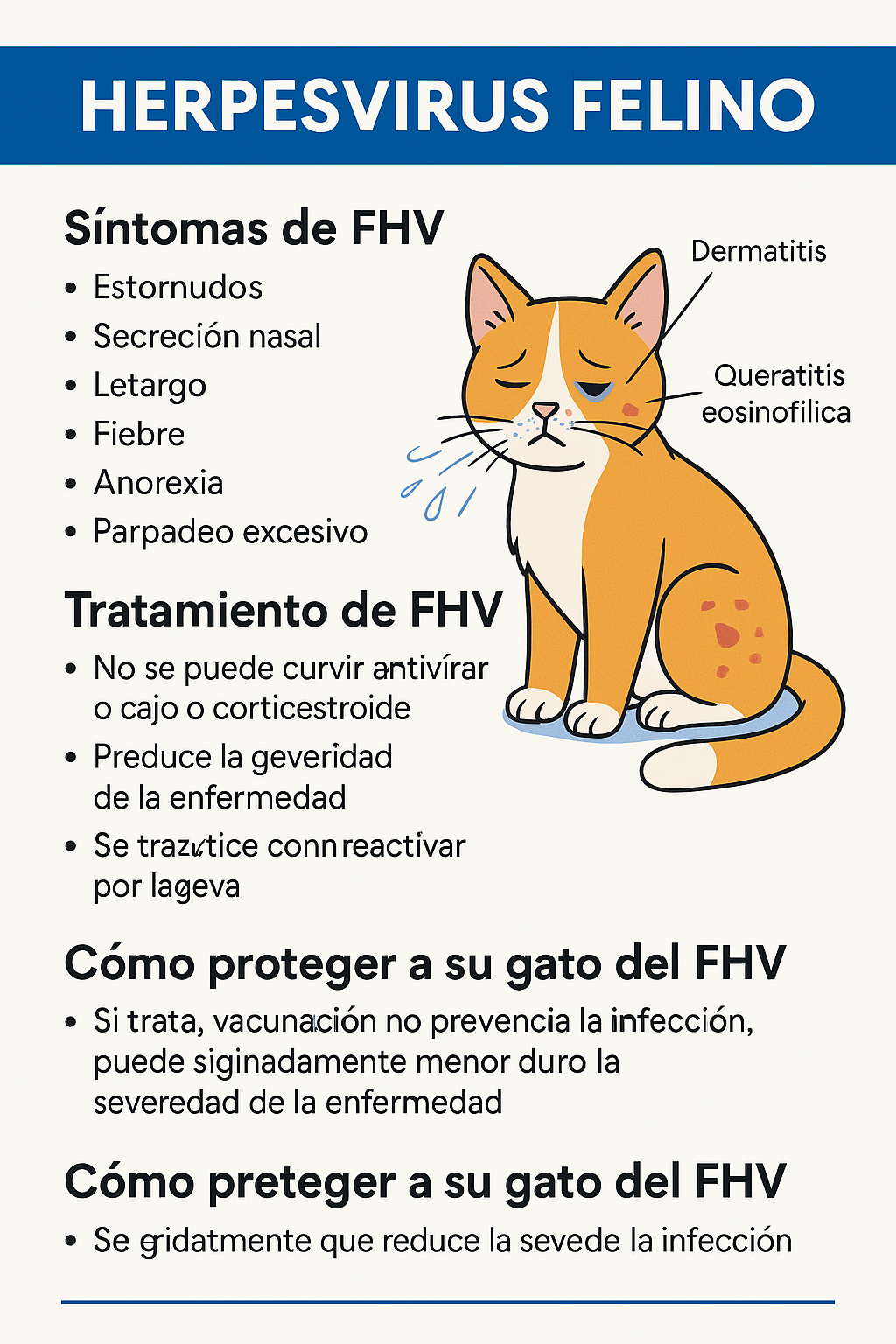
cd herpes espanol
InfografĆ­a sobre el virus del herpes felino
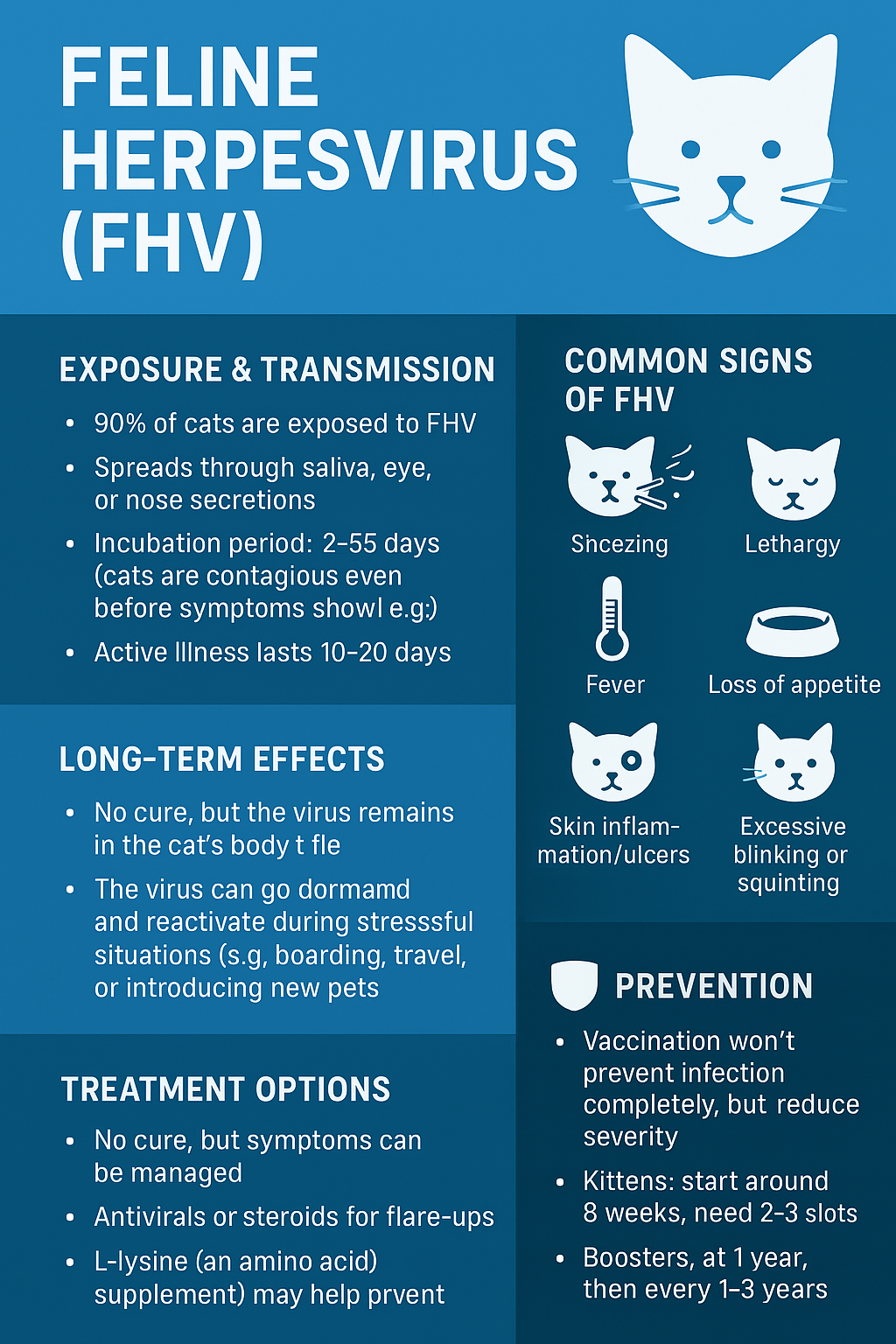
cd herpes
Infographic on the feline herpes virus

Immunodeficiency Virus (FIV)

Feline Immunodeficiency Virus (FIV) is a virus that affects a cat’s immune system. It is often compared to HIV in humans because both viruses weaken the body’s ability to fight infection. However, FIV only affects cats and cannot be passed to people or other animals.

FIV is found worldwide and is one of the most common infectious diseases affecting cats.

When a cat becomes infected with FIV, the virus attacks the immune system. This can make it harder for the cat to fight off infections and illnesses. However, many FIV-positive cats remain healthy for years and can enjoy a normal quality of life.

How is FIV spread?

The most common way FIV is spread is through deep bite wounds from an infected cat. For this reason, unneutered male cats that roam and fight are at the highest risk.

FIV is not usually spread through:

  • Sharing food or water bowls
  • Sharing litter trays
  • Sleeping together
  • Mutual grooming
  • Casual contact between friendly cats

In rare cases, an infected mother cat may pass the virus to her kittens.

What are the signs of FIV?

Many cats show no signs of illness for months or even years after becoming infected.

As the virus gradually affects the immune system, some cats may develop:

  • Recurring infections
  • Poor wound healing
  • Dental and gum disease
  • Skin problems
  • Eye infections
  • Weight loss
  • Persistent fever
  • Behavioural or neurological changes

It is important to remember that these problems are often caused by secondary infections taking advantage of a weakened immune system, rather than by the virus itself.

How is FIV diagnosed?

FIV is usually diagnosed with a simple blood test that looks for antibodies to the virus.

A positive result means the cat has been exposed to FIV and is likely infected. Occasionally, further testing may be recommended to confirm the diagnosis.

Cats that are at risk of exposure, such as outdoor cats or cats with a history of fighting, should be tested regularly.

Can FIV be treated?

There is currently no cure for FIV. However, many FIV-positive cats can live long, comfortable lives with appropriate care.

Good management includes:

  • Keeping the cat indoors or in a secure environment
  • Providing a balanced diet
  • Regular veterinary health checks
  • Prompt treatment of any infections or illnesses
  • Routine vaccinations and parasite control as recommended by your vet

Recent studies suggest that many FIV-positive cats can have life expectancies similar to those of uninfected cats, provided they receive good care and are not also infected with Feline Leukaemia Virus (FeLV).

Can FIV-positive cats live with other cats?

Because FIV is mainly spread through serious bite wounds, the risk of transmission between cats living peacefully together is very low. Many FIV-positive cats successfully share homes with FIV-negative cats without passing on the virus.

Each household is different, so owners should discuss their situation with their veterinarian before introducing cats.

Should an FIV-positive cat be adopted?

Absolutely.

Unfortunately, FIV-positive cats are often overlooked in shelters because people fear the diagnosis. In reality, many FIV-positive cats live happy, affectionate lives for many years.

With proper care, regular veterinary attention, and a safe home environment, an FIV-positive cat can make a wonderful companion.

FIV and human health

FIV cannot infect humans.

Although FIV is similar to HIV in the way it affects the immune system, it is a species-specific virus that only infects cats. There is no evidence that FIV can be transmitted to people.

Key points to remember

  • FIV is a virus that weakens a cat’s immune system.
  • It is mainly spread through deep bite wounds.
  • It is not usually spread by sharing food bowls, litter trays, or through normal social contact.
  • Many FIV-positive cats remain healthy for years.
  • There is no cure, but good care can allow affected cats to live long and happy lives.
  • FIV cannot be passed to humans.

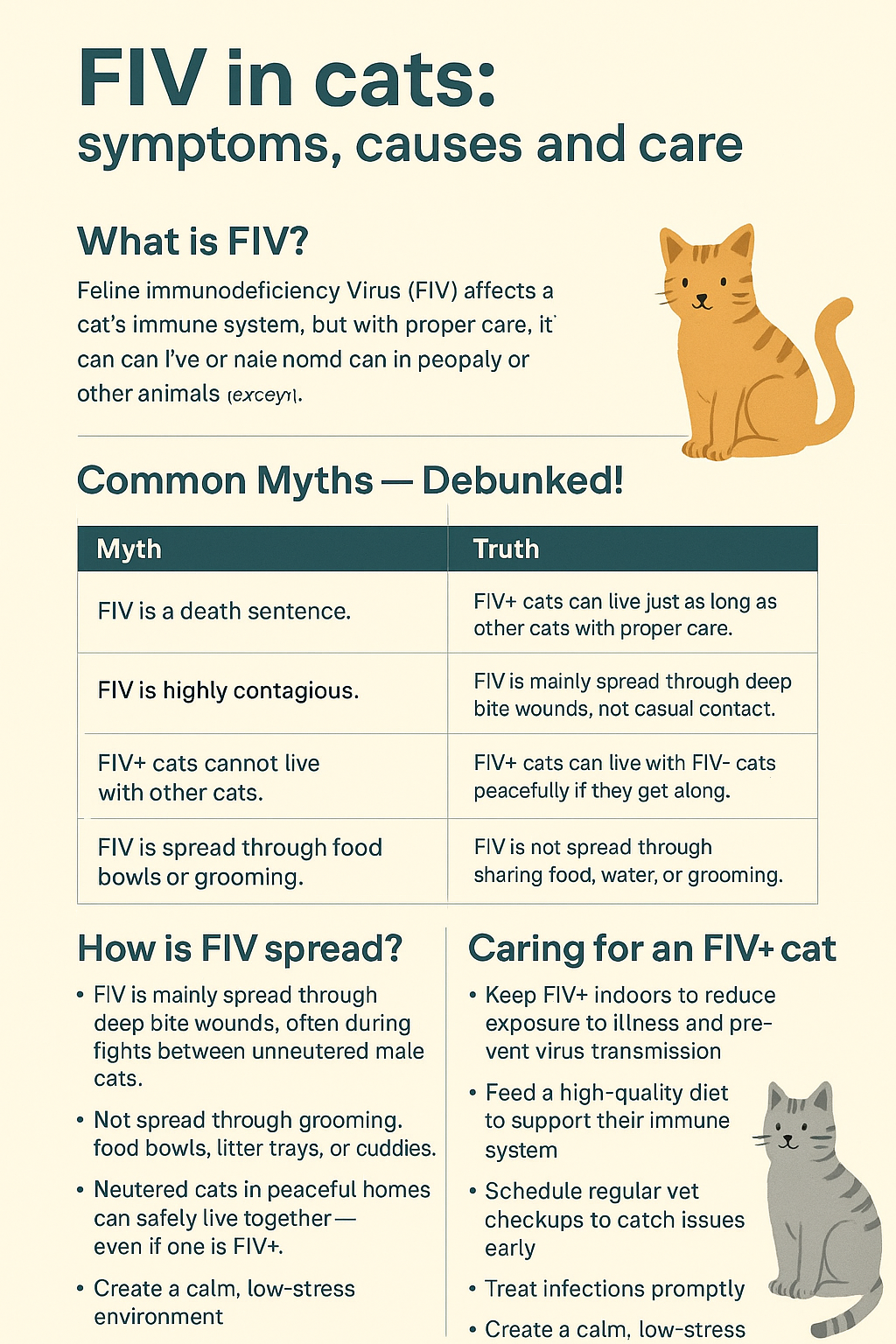
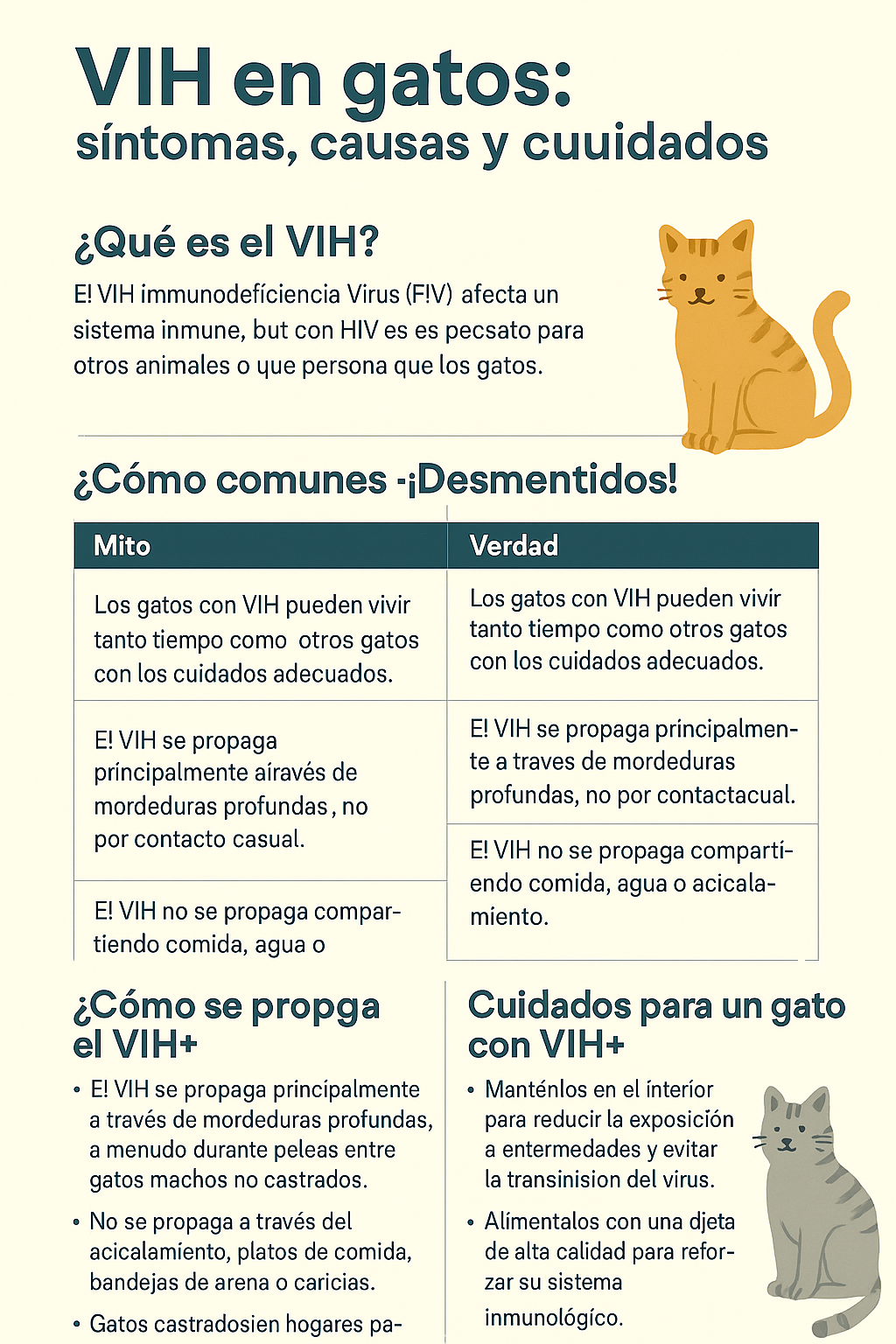
Common Myths — Debunked!

Myth

Truth

FIV is a death sentence. āŒ False

Ā FIV+ cats can live just as long as other cats with proper care. āœ… True

FIV is highly contagious. āŒ False

Ā FIV is mainly spread through deep bite wounds, not casual contact. āœ… True

FIV+ cats can not live with other cats. āŒ Not necessarily

Ā FIV+ cats can live with FIV- cats peacefully if they get along and don’t fight. āœ… True

FIV is spread through food bowls or grooming. āŒ Not true

FIV is not spread through sharing food, water, or grooming. āœ… True