Enfermedades felinas
Herpesvirus felino (FHV-1)
🐱 Lo que tienes que saber
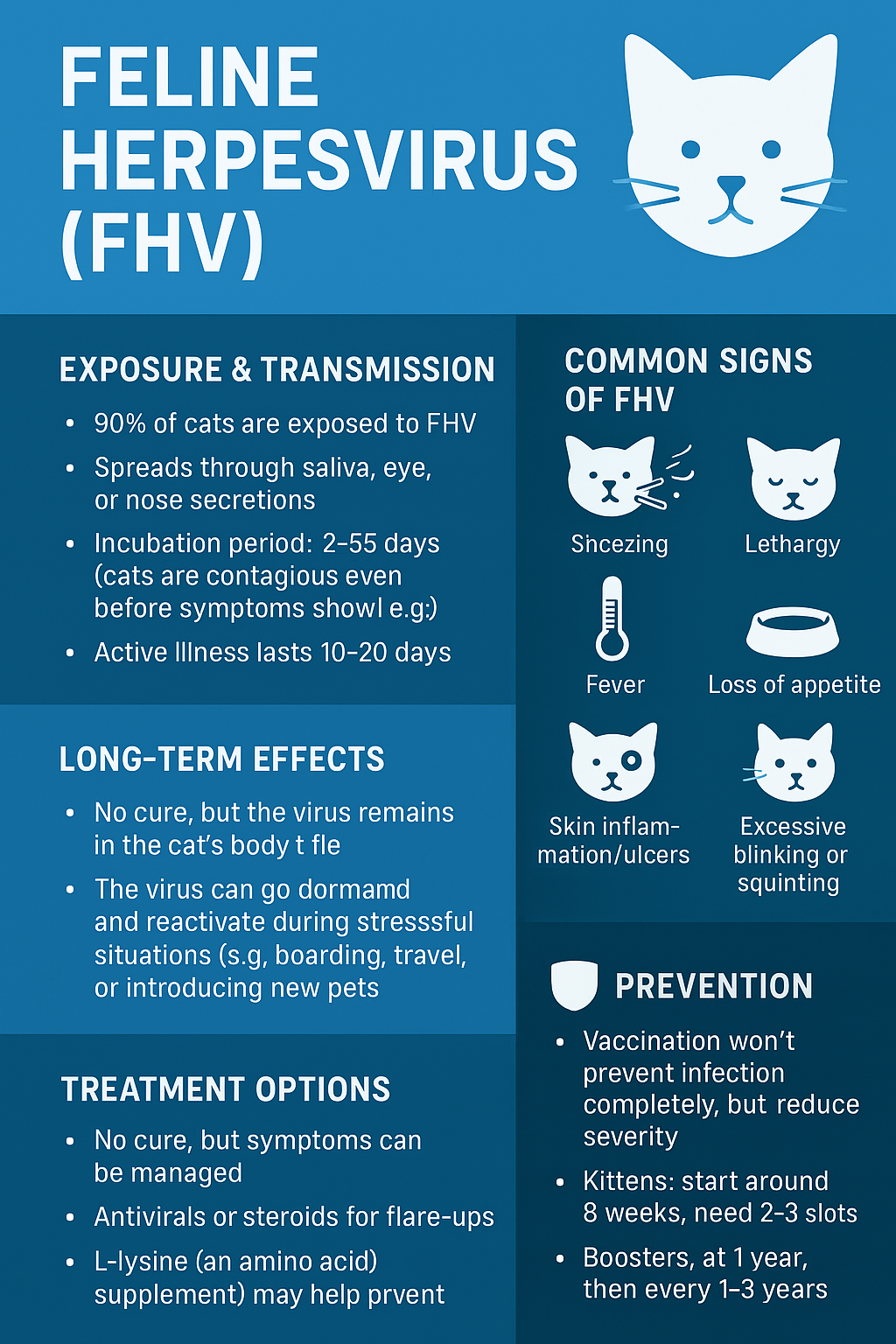
💡 Exposición y transmisión:
Alrededor del 90 % de los gatos están expuestos al FHV.
Se transmite a través de la saliva, las secreciones oculares o nasales.
Período de incubación: 2-5 días (los gatos son contagiosos incluso antes de que aparezcan los síntomas).
La fase activa de la enfermedad dura entre 10 y 20 días.
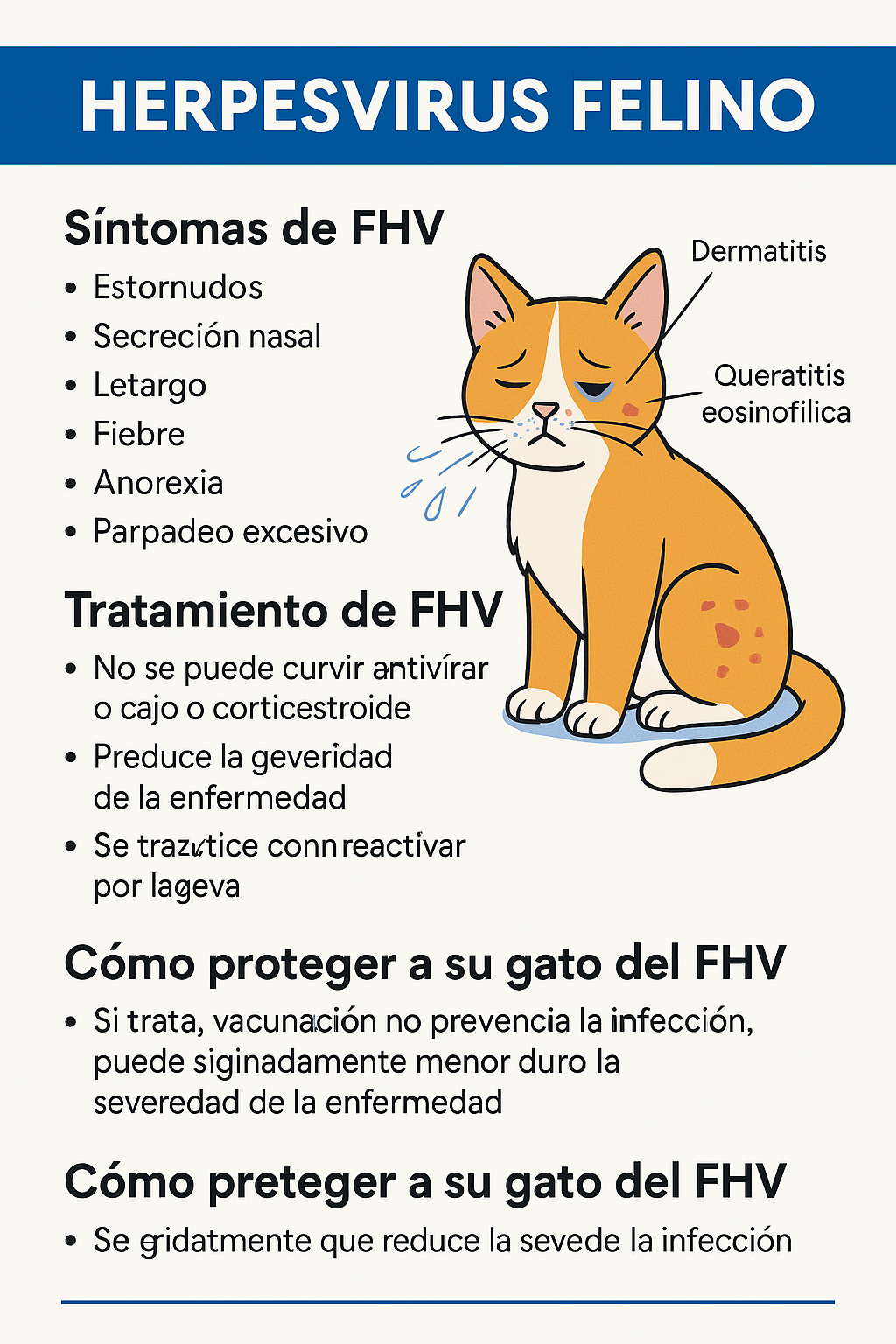
⚠️ Signos comunes de FHV:
Estornudos, secreción nasal
Letargo, fiebre, pérdida de apetito.
Inflamación/úlceras cutáneas (dermatitis)
Problemas oculares: parpadeo excesivo/entrecerrar los ojos
Puede provocar queratitis eosinofílica: inflamación crónica de la córnea.
🧬 Efectos a largo plazo:
No hay cura: el virus permanece en el organismo del gato de por vida.
Puede permanecer inactivo y reactivarse durante situaciones estresantes (por ejemplo, internados, viajes, nuevas mascotas).
💊 Opciones de tratamiento:
No hay cura, pero los síntomas pueden controlarse.
Antivirales o esteroides para los brotes
La L-lisina (suplemento de aminoácidos) puede ayudar a prevenir los brotes.
Se necesitarán medicamentos de por vida si se desarrolla queratitis eosinofílica.
🛡️ Prevención:
La vacunación no previene completamente la infección, pero reduce su gravedad.
Gatitos: comenzar alrededor de las 8 semanas, 2-3 vacunas.
Refuerzos: al cabo de 1 año, y luego cada 1-3 años.
Virus de la inmunodeficiencia felina (FIV)
El virus de la inmunodeficiencia felina (FIV) es un virus que afecta al sistema inmunitario de los gatos. A menudo se compara con el VIH en los seres humanos, ya que ambos virus debilitan la capacidad del organismo para combatir las infecciones. Sin embargo, el FIV solo afecta a los gatos y no se puede transmitir a las personas ni a otros animales.
El FIV está presente en todo el mundo y es una de las enfermedades infecciosas más comunes que afectan a los gatos.
Cuando un gato se infecta con el FIV, el virus ataca al sistema inmunitario. Esto puede dificultar que el gato combata las infecciones y las enfermedades. Sin embargo, muchos gatos seropositivos al FIV se mantienen sanos durante años y pueden disfrutar de una calidad de vida normal.
¿Cómo se transmite el VIH felino?
La forma más habitual de transmisión del FIV es a través de mordeduras profundas provocadas por un gato infectado. Por este motivo, los gatos machos no castrados que deambulan y se pelean son los que corren mayor riesgo.
El FIV no suele transmitirse a través de:
- Compartir los cuencos de comida o agua
- Compartir bandejas sanitarias
- Dormir juntos
- Aseo mutuo
- Contacto esporádico entre gatos que se llevan bien
En casos excepcionales, una gata infectada puede transmitir el virus a sus gatitos.
¿Cuáles son los síntomas del FIV?
Muchos gatos no muestran ningún síntoma de enfermedad durante meses o incluso años después de haberse contagiado.
A medida que el virus va afectando progresivamente al sistema inmunitario, algunos gatos pueden desarrollar:
- Infecciones recurrentes
- Mala cicatrización de las heridas
- Enfermedades dentales y de las encías
- Problemas cutáneos
- Infecciones oculares
- Pérdida de peso
- Fiebre persistente
- Cambios conductuales o neurológicos
Es importante recordar que estos problemas suelen estar causados por infecciones secundarias que se aprovechan de un sistema inmunitario debilitado, más que por el propio virus.
¿Cómo se diagnostica el FIV?
El FIV suele diagnosticarse mediante un sencillo análisis de sangre que detecta la presencia de anticuerpos contra el virus.
Un resultado positivo significa que el gato ha estado expuesto al FIV y es probable que esté infectado. En ocasiones, puede recomendarse realizar pruebas adicionales para confirmar el diagnóstico.
Los gatos con riesgo de exposición, como los que salen al exterior o los que tienen antecedentes de peleas, deben someterse a pruebas periódicas.
¿Se puede tratar el FIV?
Actualmente no existe cura para el FIV. Sin embargo, muchos gatos seropositivos al FIV pueden llevar una vida larga y cómoda con los cuidados adecuados.
Una buena gestión incluye:
- Mantener al gato en casa o en un entorno seguro
- Proporcionar una alimentación equilibrada
- Revisiones veterinarias periódicas
- Tratamiento inmediato de cualquier infección o enfermedad
- Vacunaciones rutinarias y control de parásitos según las recomendaciones de tu veterinario
Estudios recientes sugieren que muchos gatos positivos al FIV pueden tener una esperanza de vida similar a la de los gatos no infectados, siempre que reciban buenos cuidados y no estén infectados también por el virus de la leucemia felina (FeLV).
¿Pueden los gatos positivos al FIV convivir con otros gatos?
Dado que el FIV se transmite principalmente a través de mordeduras graves, el riesgo de transmisión entre gatos que conviven pacíficamente es muy bajo. Muchos gatos positivos al FIV conviven sin problemas con gatos negativos al FIV sin transmitirles el virus.
Cada hogar es diferente, por lo que los propietarios deberían comentar su situación con su veterinario antes de incorporar gatos a la familia.
¿Se debería adoptar a un gato positivo al FIV?
Por supuesto.
Por desgracia, los gatos positivos al FIV suelen pasar desapercibidos en los refugios porque la gente teme este diagnóstico. En realidad, muchos gatos positivos al FIV llevan una vida feliz y cariñosa durante muchos años.
Con los cuidados adecuados, visitas periódicas al veterinario y un entorno doméstico seguro, un gato seropositivo al FIV puede ser un compañero maravilloso.
El FIV y la salud humana
El FIV no puede infectar a los seres humanos.
Aunque el FIV es similar al VIH en cuanto a la forma en que afecta al sistema inmunitario, se trata de un virus específico de la especie que solo infecta a los gatos. No hay pruebas de que el FIV pueda transmitirse a las personas.
Puntos clave que hay que recordar
- El FIV es un virus que debilita el sistema inmunitario de los gatos.
- Se transmite principalmente a través de heridas profundas provocadas por mordeduras.
- Por lo general, no se transmite al compartir los comederos, las bandejas sanitarias ni a través del contacto social habitual.
- Muchos gatos positivos al FIV se mantienen sanos durante años.
- No existe cura, pero unos buenos cuidados pueden permitir que los gatos afectados disfruten de una vida larga y feliz.
- El FIV no se transmite a los seres humanos.
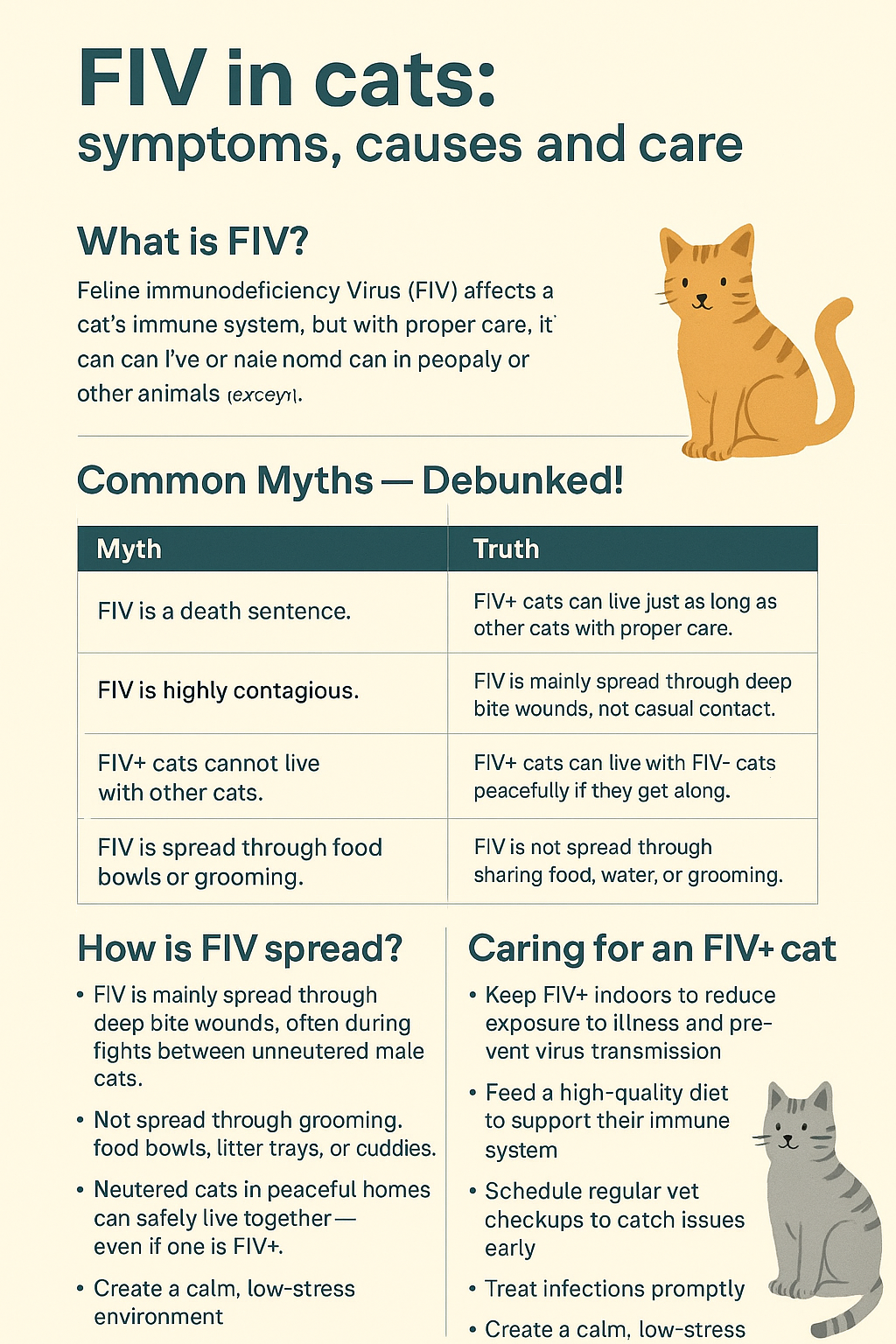
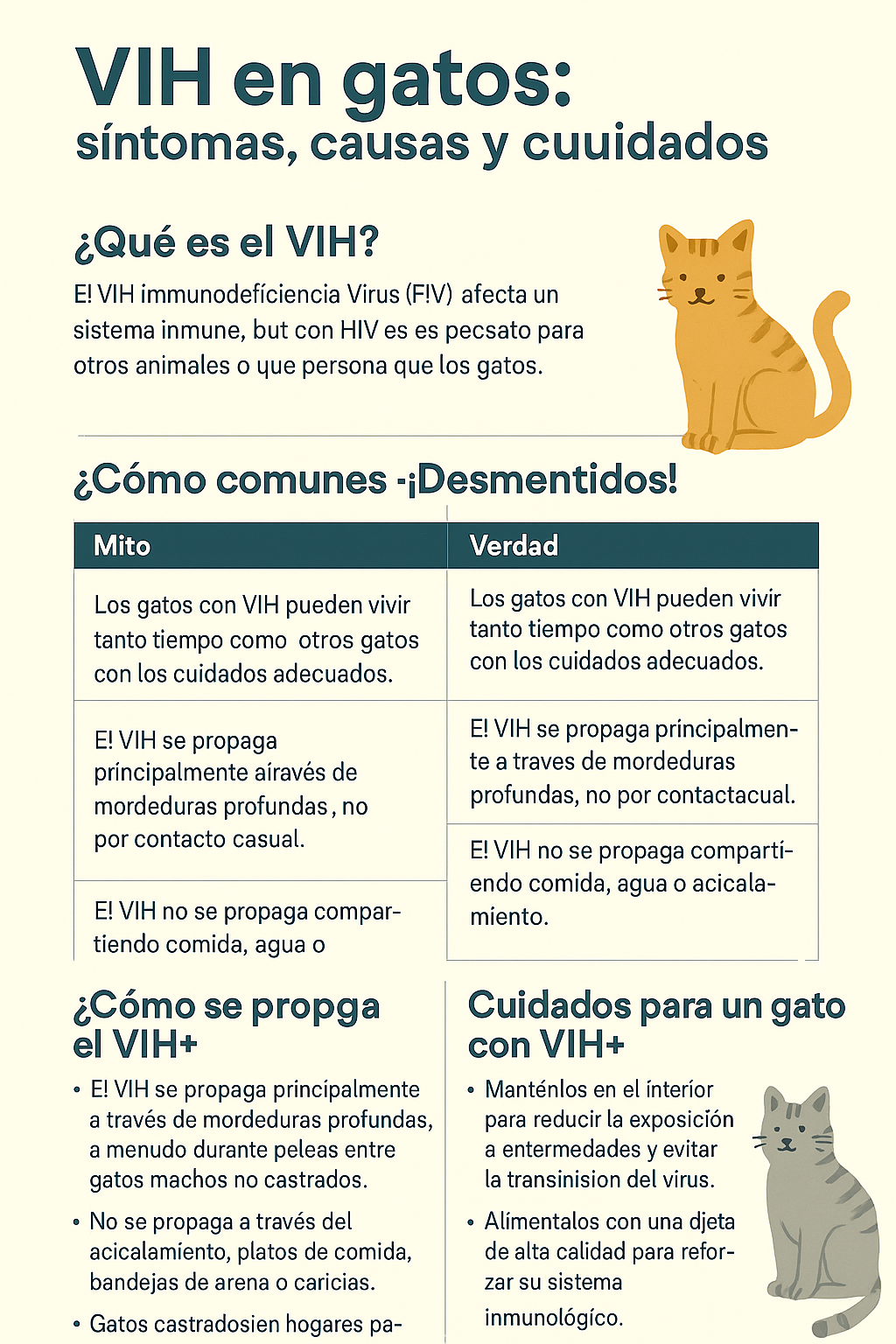
Mitos comunes: ¡desmentidos!
Mito
Verdad
El VIH felino es una sentencia de muerte. ❌ Falso
Los gatos FIV+ pueden vivir tanto como otros gatos con los cuidados adecuados. ✅ Verdadero
El FIV es muy contagioso. ❌ Falso
El FIV se transmite principalmente a través de mordeduras profundas, no por contacto casual. ✅ Verdadero
Los gatos FIV+ no pueden vivir con otros gatos. ❌ No necesariamente.
Los gatos FIV+ pueden convivir pacíficamente con gatos FIV- si se llevan bien y no pelean. ✅ Verdadero
El FIV se transmite a través de los comederos o el aseo. ❌ Falso.
El FIV no se transmite al compartir comida, agua o al acicalarse. ✅ Verdadero